


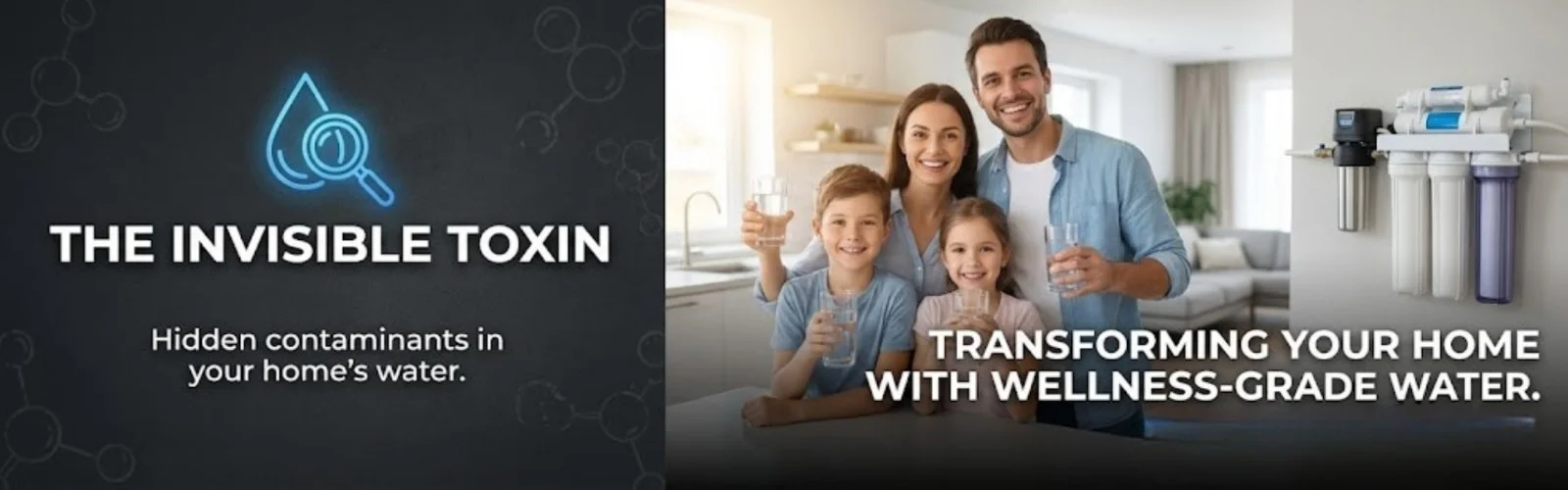
 We live in a paradox of modern hydration. In the United States, we are fortunate to have water that is bacteriologically safe; you can drink from almost any tap without fear of typhoid or cholera. But “safe” is a regulatory baseline, not a wellness standard.
For the health-conscious homeowner, the definition of water quality has shifted. We no longer just ask, “Will this water make me sick?” We ask, “Does this water support my longevity? Does it protect my skin barrier? Does it taste like nature intended?”
The answer, increasingly, is no. The very chemicals used to sanitize our municipal supply—specifically chlorine and its aggressive cousin, chloramine—have turned our home water into a chemical soup that attacks our hair, our skin, and even our plumbing.
If you are ready to move from utility-grade water to wellness-grade hydration, the solution lies in a specific piece of engineering: a whole-house water filter for chlorine. Here is why this investment is the cornerstone of a non-toxic home.
The Chemistry Check: Why Your Pitcher Filter Isn’t Enough
To understand the solution, we must first diagnose the problem. For decades, free chlorine was the standard disinfectant. It was effective and, crucially, it was volatile—meaning it would naturally evaporate if you let water sit in a pitcher.
However, to meet stricter EPA regulations regarding carcinogenic byproducts, many municipalities have switched to chloramine—a compound formed by binding chlorine with ammonia.
Chloramine is chemically stubborn. Unlike chlorine, it does not simply boil off or evaporate. It is designed to persist through miles of aging pipes to reach your tap. This stability makes it excellent for the utility company but problematic for the homeowner. Standard carbon filters found in fridge doors or shower attachments often lack the capacity to break the strong chemical bond of chloramine.
If your water has that distinct “swimming pool” odor, or if your coffee tastes chemically sharp, you are likely detecting these residual disinfectants.
The “Skin-First” Argument: Bathing in a Chemical Cloud
When we think of water filtration, we usually think of drinking. But research suggests that your biggest exposure to waterborne chemicals actually happens in the shower.
The Inhalation Effect
When you take a hot shower, the heat vaporizes volatile chemicals in the water, turning your shower stall into an exposure chamber. Studies have shown that inhalation and dermal absorption during a 10-minute shower can result in higher blood concentrations of Trihalomethanes (THMs)—potential carcinogens formed by chlorine—than drinking two liters of the same water.
The Microbiome Connection
The wellness industry is currently buzzing about the skin microbiome. Groundbreaking 2025 research has begun to link the diversity of bacteria on our skin not just to physical appearance (aging, acne, eczema) but even to psychological well-being via the “skin-brain axis.”,
Chlorinated water is a biocide; its sole purpose is to kill bacteria. When you bathe in it daily, you are essentially scorching the earth of your skin’s delicate bacterial ecosystem. This disruption can compromise your skin barrier, leading to chronic dryness, irritation, and “swimmer’s eczema.”
Protecting Your Beauty Investments
For those who invest in hair color, keratin treatments, or extensions, hard, chlorinated water is the enemy. Chlorine oxidizes keratin proteins, leading to brittle texture and split ends, while also stripping artificial color molecules. A whole-house water filter for chlorine acts as the ultimate beauty product, ensuring that the water you wash with is as pure as the products you apply.
Asset Protection: The Hidden Cost of Chloramine
Perhaps the most surprising reason to install a whole-home system is financial. Chloramine is not just aggressive toward bacteria; it is aggressive toward your home’s infrastructure.
The Rubber Deterioration Crisis
Modern plumbing relies on rubber elastomers for seals, gaskets, and O-rings. Chloramine penetrates the molecular structure of standard rubber, causing it to swell, turn mushy, and eventually fail.
- Toilet Flappers: Have a toilet that runs randomly? Chloramine has likely eaten the seal.
- Appliance Failure: Washing machine hoses and dishwasher gaskets fail prematurely in high-chloramine areas, leading to catastrophic leaks.
Pinhole Leaks in Copper
In regions like Florida and California, class-action lawsuits and municipal investigations have linked the switch to chloramine with epidemic levels of “pinhole leaks” in copper piping. These microscopic leaks often occur behind drywalls or under slabs, leading to tens of thousands of dollars in water damage and mold remediation. Installing a whole house water filter for chlorine acts as an insurance policy, removing the corrosive agent before it enters your home’s internal piping.
The Engineering Solution: Catalytic Carbon and Contact Time
Not all filters are created equal. If you walk into a big-box store and buy a standard carbon filter, it will remove free chlorine but will likely fail against chloramine. A true wellness solution requires specific engineering.
1. Catalytic Carbon Media
To remove chloramine effectively, you need Catalytic Carbon. This is activated carbon that has been processed to alter its surface structure, allowing it to act as a catalyst. It doesn’t just trap the chloramine; it initiates a chemical reaction that breaks the ammonia-chlorine bond, converting it into harmless chloride and nitrogen gas.
2. The Criticality of “Contact Time”
This is where physics comes into play. For catalytic carbon to work, the water must touch the media for a specific amount of time—known as Empty Bed Contact Time (EBCT).
- Chlorine removal requires a short contact time (1–2 minutes).
- Chloramine removal requires a massive 4–10 minutes of contact time.
This is why small shower filters or under-sink units are physically incapable of protecting your whole home. Only a large, whole-house tank has the volume required to hold the water long enough for the catalytic reaction to occur.
The Finishing Touch: Terroir and Taste
Once you have removed the chemicals, you are left with a blank canvas. However, high-purity water (especially from Reverse Osmosis) can taste “flat” or slightly acidic because the minerals have been removed along with the toxins.
To achieve the “wellness water” standard—water that rivals the world’s best natural springs—we must look at remineralization.
By reintroducing specific electrolytes like Magnesium and Calcium before the water hits your glass, we accomplish two things:
- Alkaline Balance: We shift the pH to a healthy 7.5–8.5 range, preventing the “bitter” taste of acidic water.
- Flavor Profiling: Just as a barista uses specific water profiles to extract the best notes from coffee, remineralized water provides the “body” and “mouthfeel” that makes hydration satisfying.
Conclusion: Invest in Your Home’s Health
We spend a fortune on organic food, non-toxic cleaning products, and skincare regimens, yet we often overlook the gallons of chemically treated water we consume and bathe in every day.
A whole house water filter for chlorine is not a luxury; it is a foundational component of a healthy home. It protects your skin microbiome from daily chemical assault, preserves the longevity of your home’s plumbing, and provides your family with hydration that is truly pure.
Don’t settle for “utility-safe.” Demand “wellness-optimal.”
