


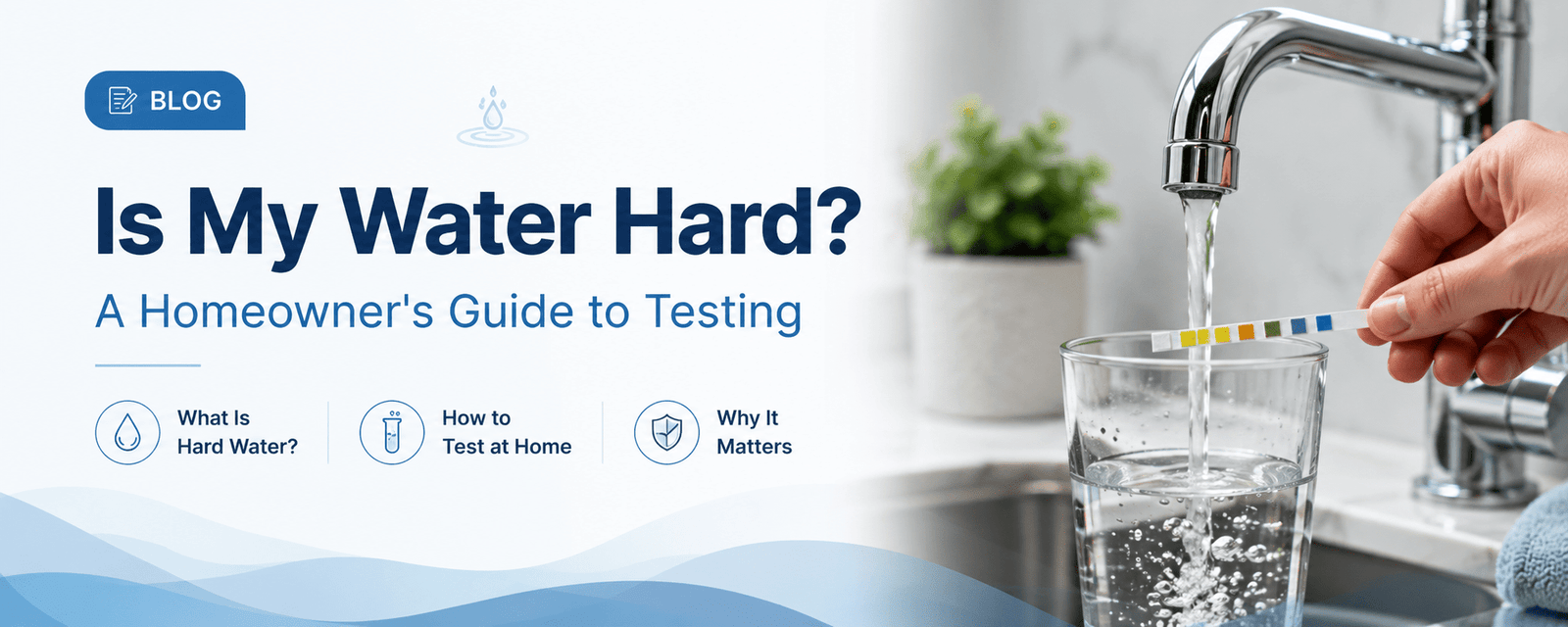
Hard water is a common issue that causes dry skin, scale buildup, and expensive appliance repairs for homeowners. Understanding water hardness levels and recognizing the symptoms early can save you money and protect your family’s wellness. This comprehensive guide explains how to identify hard water, the best testing methods available, and how Wellness Water Company can transform your home’s water quality.
Hard water is water that contains high levels of dissolved minerals, primarily calcium and magnesium. You can tell if your water is hard by looking for scale buildup on fixtures, dry skin, and reduced appliance efficiency, which can be confirmed using a home testing kit or professional water analysis.
Key Takeaways
- Hard water contains excess calcium and magnesium, leading to scale buildup, higher energy bills, and dry skin.
- Water hardness is measured scientifically in grains per gallon (GPG) or parts per million (PPM).
- DIY test strips offer a quick baseline, but professional testing provides precise data for targeted solutions.
- Installing a whole-home water softening system from Wellness Water Company protects your appliances, lowers energy bills, and improves your family’s skin and hair health.
What are the common symptoms of hard water in a home?
The most common symptoms of hard water include white chalky scale on plumbing fixtures, dry or itchy skin after bathing, faded laundry, and a noticeable decrease in water pressure. Recognizing these signs early allows homeowners to address the issue before it causes permanent damage to plumbing infrastructure.
Here are the specific indicators that you are dealing with hard water:
- Scale buildup: Crusty white mineral deposits often appear on showerheads, faucets, and glass shower doors.
- Skin and hair issues: High mineral content strips natural oils from your body. This leaves your skin feeling dry and itchy, while your hair may look dull and feel brittle.
- Appliance wear and tear: Hard water forces water heaters, dishwashers, and washing machines to work harder. This reduces their lifespan and increases your monthly utility bills.
- Spotty dishes: If your glasses come out of the dishwasher with cloudy water spots, excess calcium is likely the culprit.
- Lack of soap lather: Hard water prevents soap from dissolving properly, meaning you have to use more shampoo and dish soap to achieve a basic lather.
How do you understand water hardness levels (GPG vs. PPM)?
Water hardness is scientifically measured by the concentration of dissolved minerals, expressed either as grains per gallon (GPG) or parts per million (PPM). Understanding these metrics helps you determine the exact severity of your water quality issues. One GPG is equivalent to 17.1 PPM.
The Water Quality Association classifies water hardness based on the following scale:
| Classification | Grains Per Gallon (GPG) | Parts Per Million (PPM) |
| Soft Water | 0 – 1.0 GPG | 0 – 17.1 PPM |
| Slightly Hard | 1.0 – 3.5 GPG | 17.1 – 60 PPM |
| Moderately Hard | 3.5 – 7.0 GPG | 60 – 120 PPM |
| Hard | 7.0 – 10.5 GPG | 120 – 180 PPM |
| Very Hard | Over 10.5 GPG | Over 180 PPM |
If your water measures above 7.0 GPG, you will likely experience noticeable degradation in your home’s appliances and plumbing.
How can you test for water hardness at home?
You can test for water hardness at home using a simple soap lather test, liquid testing kits, or chemical test strips. These DIY methods provide a fast, accessible way to estimate the mineral concentration in your water supply.
The Soap Test: Fill a clear, empty water bottle one-third full of tap water. Add a few drops of pure liquid soap, cap the bottle, and shake it vigorously. If the water becomes cloudy and fails to produce a thick layer of bubbles, your water is hard.
Test Strips: Home improvement stores sell specialized water testing strips. You simply dip the strip into a glass of tap water for a few seconds. The strip will change color, which you can then match to a provided color chart to determine your approximate GPG or PPM levels.
What are the benefits of professional water hardness testing?
Professional water hardness testing provides an exact measurement of mineral concentrations and identifies other hidden contaminants, which DIY test strips often miss. A certified technician can evaluate your water on-site and offer a comprehensive breakdown of your specific water chemistry.
Choose DIY test strips if you only need a quick, affordable estimate of your water’s mineral content. Choose professional testing if you are experiencing severe appliance degradation, have health concerns about contaminants, or need to correctly size a whole-home water softening system. Professional testing ensures that the resulting filtration solution is perfectly tailored to your home’s unique water profile.
What is the best solution for hard water in a home?
The most effective solution for hard water is installing a whole-home water softening and filtration system, which removes calcium and magnesium ions before they enter your plumbing. Wellness Water Company provides advanced systems that ensure cleaner water at every tap, transforming your home’s water quality immediately.
By investing in a premium system, you directly protect your home’s infrastructure. These low-maintenance units prevent future scale buildup, which improves appliance efficiency and provides cost-effective water solutions for years to come. Wellness Water Company systems also come with a two-day professional installation guarantee, meaning you can enjoy softer skin, healthier hair, and better-tasting water without a prolonged disruption to your daily life.
Frequently Asked Questions about Hard Water
How much does it cost to fix hard water?
The cost to fix hard water depends on the size of your home and the severity of the mineral concentration. While a whole-home water softening system requires an upfront investment, it provides long-term cost efficiency by lowering energy bills and eliminating the need for frequent appliance repairs.
How long does it take to install a whole-home water softening system?
Professional installation of a whole-home water softening system is incredibly efficient. Wellness Water Company completes most residential installations within 1-2 days. This rapid turnaround ensures you experience an immediate improvement in water quality.
What are the health risks associated with drinking hard water?
Drinking moderately hard water is generally safe and can even contribute to your daily calcium intake. However, bathing in hard water frequently exacerbates skin conditions like eczema and dermatitis. Furthermore, hard water scale can harbor bacteria in your plumbing, making a purification system a wise choice for a wellness-focused lifestyle.
Does hard water affect both city and well water sources?
Yes, hard water affects both municipal city water and private well water. Groundwater naturally absorbs calcium and magnesium from surrounding rocks and soil, meaning homes on any water source can experience the negative symptoms of high mineral content.
What is the difference between a water softener and a water purifier?
A water softener specifically removes hard minerals like calcium and magnesium to prevent scale buildup and protect plumbing. A water purifier removes harmful contaminants, chemicals, and bacteria to ensure the water is safe and healthy to consume. Wellness Water Company offers systems that combine both technologies for a complete whole-home solution.
Protect Your Home and Wellness with Purified Water
Identifying hard water is the first step toward improving your daily comfort and protecting your property. By recognizing the symptoms and testing your water’s hardness levels, you can make an informed decision about your home’s plumbing infrastructure.
Do not let hard water drain your budget through high energy bills and constant appliance repairs. Invest in your family’s health and transform your home’s water today. Contact Wellness Water Company to schedule a professional water test and discover how our advanced whole-home water softening systems can provide cleaner, healthier water at every tap.