

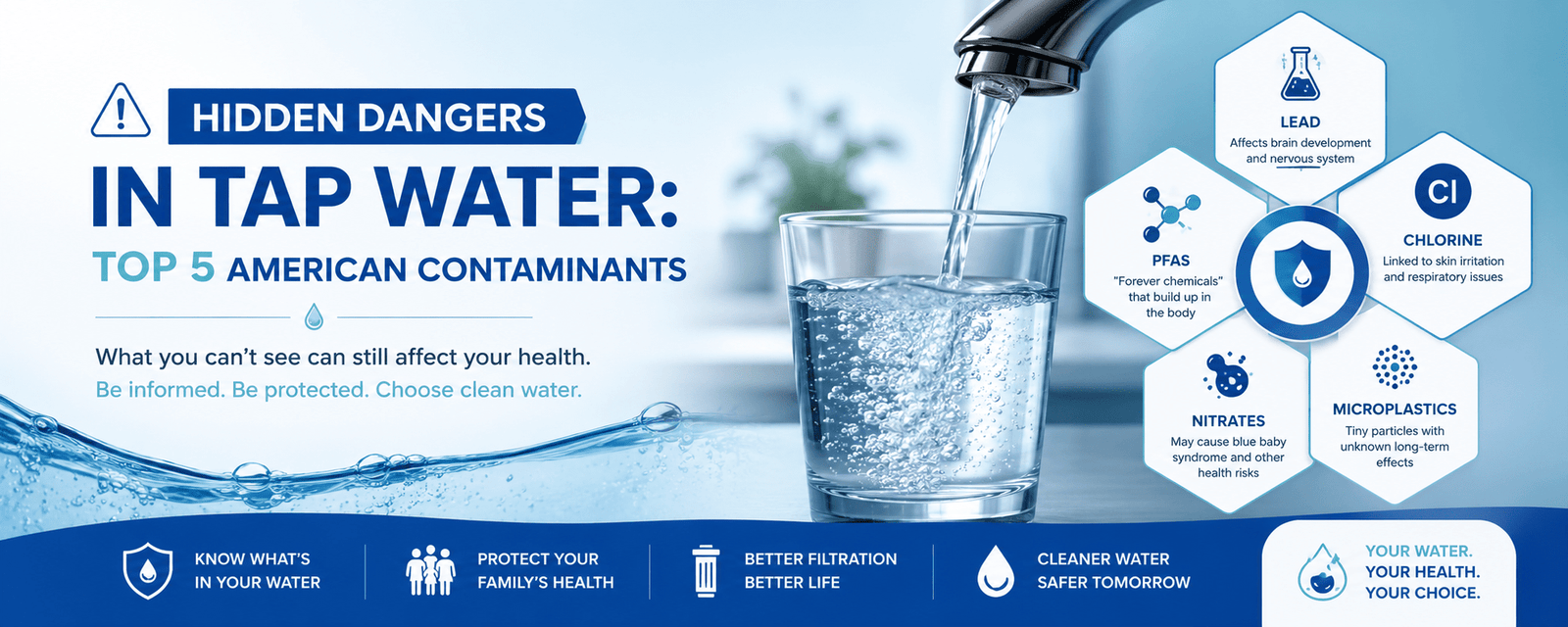
Tap water may look clean, but that does not mean it is truly clean. What comes through your pipes can affect your family’s health, your skin and hair, and the lifespan of the appliances you rely on every day. Municipal treatment helps, but it does not guarantee complete protection once water travels through aging infrastructure and into your home. Let’s learn more about “Hidden Dangers in Tap Water: Top 5 American Contaminants”.
You do not have to guess what is in your water. You can test it, identify the risks, and take action with a whole-house system designed to deliver cleaner water at every tap. If you want better taste, fewer contaminants, less scale buildup, and more confidence in the water your family uses every day, the next step is simple: schedule a professional water assessment and get clear answers.
Key Takeaways
- Municipal water treatment facilities cannot eliminate all harmful substances, leaving your home exposed to trace heavy metals, chemicals, and industrial runoff.
- The five most prevalent threats in American drinking water include lead, chlorine, arsenic, volatile organic compounds (VOCs), and heavy metals.
- Point-of-use pitcher filters only treat one faucet. A whole-house water filtration system removes impurities at every point of entry, ensuring cleaner water at every tap.
- You cannot choose the correct filtration media without first testing your water to identify your specific contaminant profile.
Why isn’t municipal tap water safe to drink directly?
You can’t make a smart water decision until you know where municipal treatment stops. City systems are built to disinfect at scale. They are not built to customize water quality for your home, your plumbing, or your family’s daily exposure. That gap matters.
Municipal tap water often falls short because treatment plants focus on broad disinfection, not complete purification. Facilities rely heavily on chemicals like chlorine to kill immediate biological threats such as bacteria and viruses. But that process does not prevent water from picking up heavy metals from old pipes or carrying chemical byproducts into your glass, your shower, and your laundry.
You should not assume city water is fully clean by the time it reaches your faucet. Between the treatment plant and your home, water travels through miles of infrastructure that may be old, corroded, or poorly maintained. That is why testing your water is not optional if you want real peace of mind.
Municipal water treatment limitations include:
- Disinfection byproducts: Chlorine reacts with organic matter to create harmful compounds.
- Infrastructure decay: Corroding pipes introduce lead and copper directly into your home’s supply.
- Agricultural runoff: Pesticides and nitrates seep into groundwater and bypass standard filtration methods.
- Outdated safety standards: Government regulations often lag behind current scientific health recommendations regarding safe exposure limits.
If you have noticed dry skin, bad-tasting water, scale on fixtures, or concerns about contaminants, now is the time to act. A professional water assessment gives you the facts before those issues become more expensive.
What are the top 5 contaminants found in American drinking water?
You can’t remove what you have not identified. That is the first rule of safer water. Many homeowners know their water tastes off or leaves residue behind, but they do not know which contaminants are responsible or what those contaminants may be doing to their health and home.
The most common contaminants found in U.S. water supplies range from treatment chemicals to naturally occurring toxins and industrial pollutants. Knowing the top risks helps you understand why a basic filter is often not enough and why a properly matched whole-home system delivers better protection.
The table below breaks down the top five hidden dangers commonly found in tap water, including their sources and primary health risks:
| Contaminant | Primary Source | Health and Household Risks |
| Lead | Corroding aging pipes and old home plumbing fixtures. | Severe developmental delays in children, neurological damage, and cognitive issues. |
| Chlorine | Added by municipal water facilities for basic disinfection. | Dries out skin and hair, causes fading in laundry, and creates a harsh chemical taste and odor. |
| Arsenic | Naturally occurring in groundwater and industrial runoff. | Long-term exposure is linked to cardiovascular disease and various forms of cancer. |
| VOCs | Solvents, fuels, and industrial waste seeping into water tables. | Headaches, nausea, and long-term liver or kidney damage. |
| Heavy Metals | Industrial pollution and natural earth deposits (e.g., mercury). | A wide range of toxic effects including kidney damage and neurological disorders. |
This is exactly why one-size-fits-all filtration falls short. You need a system built around your water, not generic assumptions. Testing first gives you the clarity to choose the right protection and avoid wasting money on the wrong setup.
How does chlorine exposure affect your skin, hair, and health?
Chlorine does more than disinfect. It changes how your water feels, smells, and affects your body every day. That matters because exposure is not limited to what you drink. It also happens in the shower, at the sink, and in the steam you breathe.
Chlorine strips your body of natural oils, which can lead to dry skin, brittle hair, and respiratory irritation during hot showers. Municipalities use chlorine because it is effective and inexpensive for disinfection in transit. But what works for treatment plants is not always what you want flowing through your home.
Your skin absorbs this chemical every time you bathe. You want water that supports wellness, not water that leaves you itchy, dry, and uncomfortable. If your shower leaves your skin tight or your hair dull, your water may be part of the problem.
The immediate effects of chlorine exposure include:
- Dull, lifeless hair that resists styling.
- Tight, itchy skin immediately following a shower or bath.
- Faded clothing and stiff laundry fabrics after washing.
- A distinct chemical smell masking the natural taste of your beverages.
You do not have to live with these daily frustrations. A properly designed whole-house system can reduce chlorine exposure across your entire home, helping you feel the difference from the first shower.
What are the health risks associated with lead in older plumbing?
Lead is one of the most serious water concerns because you cannot detect it on your own. No smell. No taste. No visible warning. That makes testing and removal essential, especially if you live in an older home.
Lead exposure causes irreversible neurological damage and developmental delays, particularly in young children and infants. It does not naturally occur in source water. It leaches into your supply as water moves through corroding lead pipes, brass fixtures, and lead solder.
You cannot wait for symptoms. By then, the damage may already be done. Because no safe level of lead exposure exists according to the EPA, removing it at the point of entry is critical for your family’s safety.
If your home has older plumbing or you simply do not know what materials are in your water lines, this is the moment to get answers. Schedule FREE water assessment and find out whether lead or other hidden contaminants are entering your home right now.
How do you completely remove dangerous contaminants from your home’s water?
You need more than a quick fix. Pitcher filters and faucet attachments can help in limited ways, but they do not protect your shower, your laundry, your appliances, or every glass of water served throughout the house. If you want full-home protection, you need a full-home strategy.
A whole-house water filtration system removes contaminants before they spread through your plumbing. That means cleaner water for drinking, cooking, bathing, and washing. It is not just about convenience. It is about reducing daily exposure and protecting the systems inside your home from long-term damage.
To transform your home’s water, you need a system engineered to handle multiple stages of purification. Advanced systems remove sediment, reduce chemicals like chlorine, and capture heavy metals before they affect your health or your home. The right setup does not stop at filtration — it also improves performance, comfort, and value.
A comprehensive purification strategy involves:
- Testing: Conducting an independent water purity test to identify specific toxins.
- Filtration: Utilizing carbon and catalytic media to trap VOCs and chlorine.
- Softening: Removing hard minerals like calcium to protect appliances from scale buildup.
- Alkalizing: Re-adding beneficial minerals for healthier, better-tasting drinking water.
This is where many homeowners save money long term. Cleaner water can reduce buildup, lower appliance strain, and help you avoid frequent repairs. The sooner you identify the right system, the sooner you start protecting both your health and your budget.
Why is a whole-house water filtration & softener system better than a point-of-use filter?
You cannot get whole-home wellness from a single-faucet filter. Point-of-use systems treat one spot. A whole-house system treats the water entering your property before it reaches your taps, showers, water heater, dishwasher, and washing machine.
If you want total protection from the shower to the kitchen sink, the best home water system is a whole-house solution. That is the difference between partial improvement and complete coverage.
You should not stop at drinking water alone. Your family bathes in this water. Your skin touches it. Your clothes absorb it. Your appliances process it every day. A wellness-focused home needs water protection that covers the whole picture, not just one faucet.
Wellness Water Company systems are EPA-registered, NSF-certified, and trusted by NASA to deliver ingredient-quality water directly to your tap. That gives you more than filtration. It gives you confidence in what your family uses every day.
Choose a whole-house system if you want to:
- Protect your family’s health: Eliminate toxins from drinking, cooking, and bathing water simultaneously.
- Save money on utilities: Prevent scale buildup that forces water heaters and dishwashers to work harder and fail faster.
- Reduce maintenance: Install a durable system designed for long-lasting performance, bypassing the need to constantly swap out cheap pitcher cartridges.
If you are comparing options, start with the system that addresses the entire problem. Book a professional assessment and get a recommendation based on your actual water source, your home, and your goals.
How to take control of your home’s water quality today
You do not need to keep guessing. You do not need to settle for bottled water, patchwork filters, or daily frustration with hard water and chemical taste. Clean, pure water is nonnegotiable for health, comfort, and peace of mind.
The first step is simple. Test your water. Once you know what is in it, you can make a confident decision based on facts, not assumptions. That is how you protect your family, improve your water quality, and avoid spending money on the wrong system.
Wellness Water Company offers professional water assessments conducted by WQA-certified specialists. By identifying your specific contaminant profile, you can move forward with a targeted, cost-effective system built for your home’s needs. Installation is fast. Benefits are immediate. The long-term value is clear.
Do not wait for more scale buildup, more dry skin, or more concern about what your family is drinking. Schedule your free water purity test today and take the first step toward healthier water, lower maintenance, and greater peace of mind.
Frequently asked questions about tap water contaminants
How much does a whole-house water filtration system cost?
The cost depends on your home’s size and your specific water chemistry profile. That is exactly why testing comes first. A properly matched system gives you better performance and better value over time.
High-quality systems offer substantial long-term savings by reducing appliance repairs, lowering energy bills, and eliminating the need for bottled water. Wellness Water Company also offers 100% financing with options like 12 months at 0% interest, making it easier to invest in your family’s health without delaying action.
If cost has been holding you back, start with the assessment. You may be closer to an affordable whole-home upgrade than you think.
How long does it take to install a water filtration system?
Professional installation is typically completed within 1-2 days. That means you can move from uncertainty to noticeably better water in a very short time.
You will enjoy immediate improvements in water quality, taste, and softness the moment the system is activated by a certified technician. Fast installation means there is no reason to keep putting off a healthier home water setup.
What are the risks of ignoring hard water and contaminants?
Waiting has a cost. Poor water quality can lead to premature appliance failure, chronic dry skin, stiff laundry, unpleasant taste, and long-term health concerns from ongoing exposure to VOCs and heavy metals.
You often pay for bad water in ways that are easy to miss:
- Higher utility bills
- More soap and detergent use
- Frequent plumbing and appliance repairs
- Continued exposure to unwanted contaminants
In many homes, ignoring the issue costs more than fixing it. A water assessment helps you understand the risk now, before it becomes a bigger expense later.
Who should invest in advanced water purification?
You should invest in a whole-house system if you experience bad-tasting water, dry skin after showering, scale buildup on fixtures, or if your home was built before modern lead-free plumbing regulations.
You should also act if:
- You want healthier water for your family
- You rely on well water or aging city infrastructure
- You want to reduce bottled water use
- You want to protect appliances and cut maintenance costs
Choose comprehensive filtration if protecting your family’s long-term health is your top priority. Schedule your water assessment today and find out exactly what your home needs for cleaner, healthier water at every tap.