

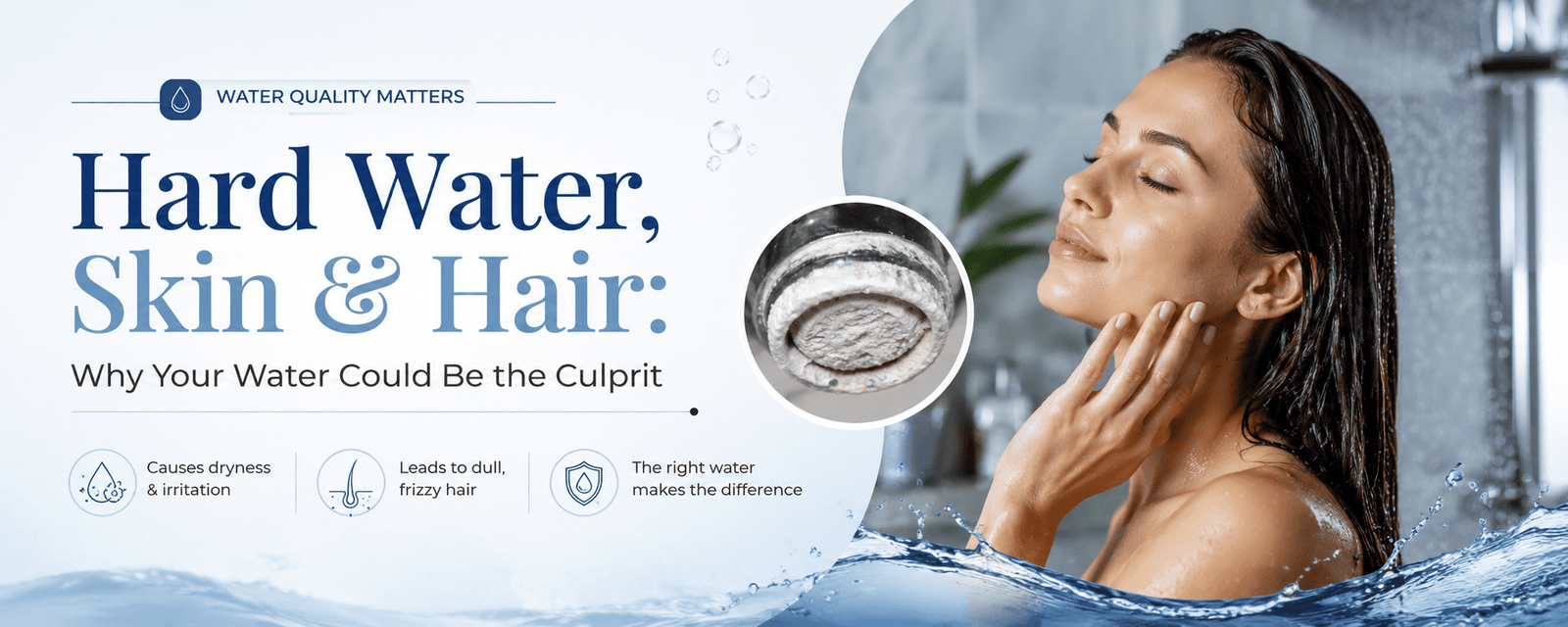
Key Takeaways
- Hard water leaves mineral and soap-scum residue on skin and hair.
- That residue can dry skin, dull hair, and irritate sensitive or eczema-prone skin.
- Lotions and shampoos only mask the problem — they don’t address the water.
- Softened or conditioned water often improves skin and hair noticeably.
- A water test confirms whether hardness is your underlying issue.
How Hard Water Affects Your Skin
When you wash with hard water, the calcium and magnesium react with your soap or body wash to form a sticky residue called soap scum — the same film you see on your shower door, except it’s also forming on your skin. This residue is hard to rinse away fully, and it can disrupt the skin’s natural moisture barrier. The result is skin that feels tight, dry, or itchy after washing, even when you’ve used a “moisturizing” product.
For people with sensitive skin or conditions like eczema, this matters even more. Many dermatology researchers have explored a link between hard water and increased skin barrier disruption and eczema flare-ups, particularly in children. While hard water doesn’t cause eczema, it can aggravate already-sensitive skin.
How Hard Water Affects Your Hair
Your hair takes the same hit. Mineral buildup and soap residue coat the hair shaft, leaving it feeling rough, looking dull, and behaving unpredictably. Common complaints from people in hard-water areas include:
- Hair that feels filmy or “coated” even after washing.
- Dullness and loss of shine.
- Tangling and difficulty styling.
- Color-treated hair that fades faster.
- A flaky, itchy scalp from residue buildup.
Why Lotions and Shampoos Only Mask the Problem
Here’s the frustrating cycle: hard water leaves residue, so you buy stronger products to fight it, which leave their own buildup, which the hard water makes harder to rinse… and round it goes. Topical products treat the symptom while the cause flows from every faucet, untouched. You can spend endlessly on the surface and never fix the source.
Softening at the Source: The Lasting Fix
The genuine solution is to change the water before it ever reaches your skin and hair. With softened or conditioned water:
- Soap and shampoo rinse cleanly, leaving no scum.
- Less product is needed to get the same lather and clean.
- Skin tends to feel less tight and dry after washing.
- Hair often regains softness and shine over a few weeks.
Many people are genuinely surprised at the difference once the mineral interference is gone — it’s the kind of change you feel in the first shower and see within weeks.
Switch to advanced technology backed whole house water filtration and softener system, EPA registered, NSF certified and trusted by NASA.
Frequently Asked Questions
Can hard water cause acne or skin problems?
Hard water doesn’t directly cause acne, but the residue it leaves can clog and irritate skin and aggravate conditions like eczema and dryness.
Does a water softener help eczema?
Many people with eczema report relief with softened water because it reduces the soap-scum residue that irritates sensitive skin, though results vary by individual.
Why is my hair dull or filmy after showering?
Hard water leaves mineral and soap residue on the hair shaft, which dulls shine and creates a coated feeling.
Does soft water make skin feel slippery?
Yes — without minerals binding the soap, water rinses cleaner, which can feel “slippery.” That’s the soap rinsing away properly, not residue left behind.