

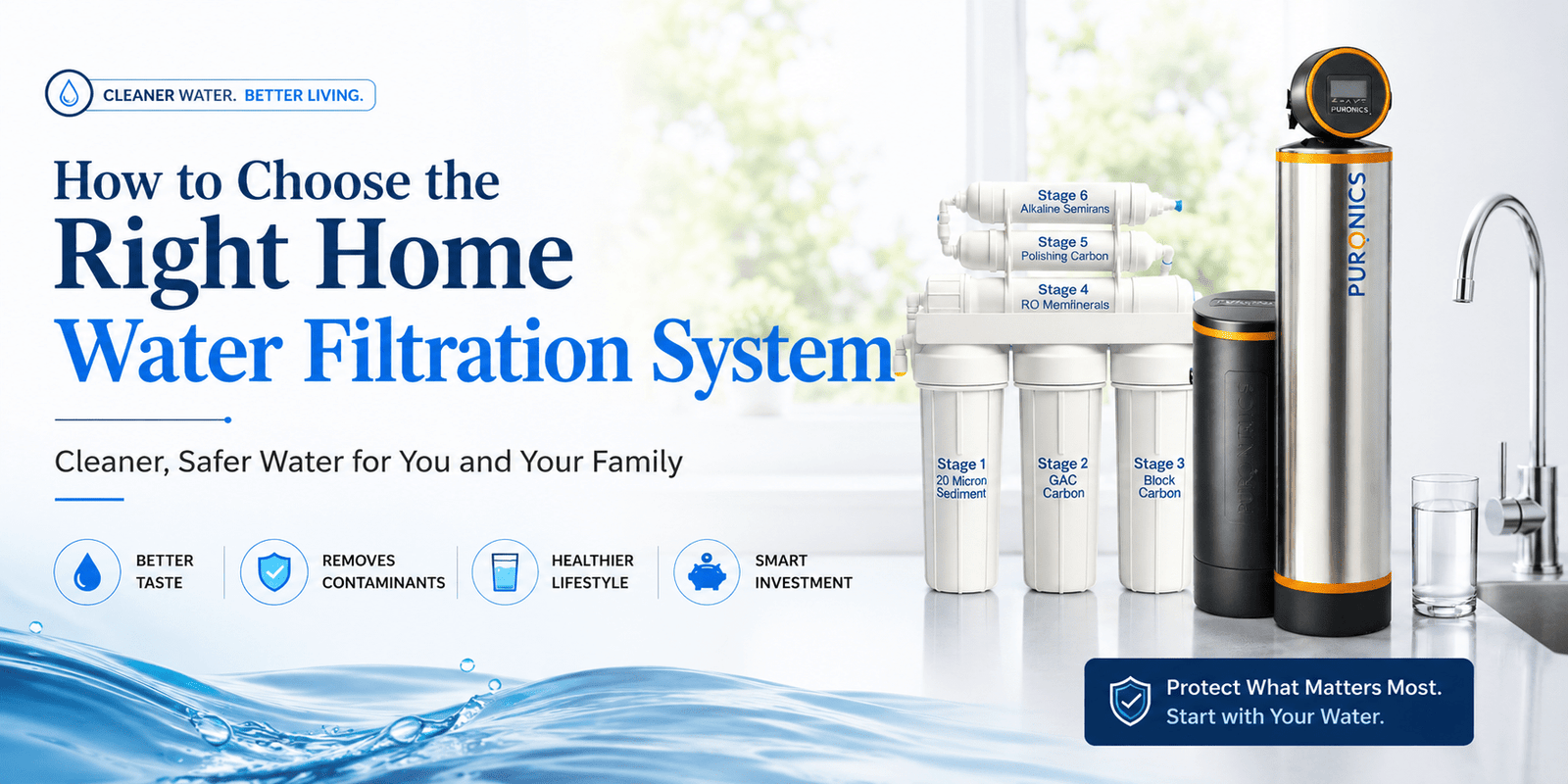
Clean, pure water is nonnegotiable for your health, comfort, and peace of mind. You cannot achieve true home wellness when your tap water contains harsh minerals, chlorine, and hidden toxins that degrade your skin and damage your appliances. This guide explains exactly how to evaluate your water supply and choose the right whole-house water filtration system to protect your entire family. By understanding the long-term health and financial benefits of purified water, you will make a confident investment that transforms your daily life.
Key Takeaways
- Test before you invest: You must understand your specific water source and contaminant profile before selecting a water filtration system.
- Whole-house vs. point-of-use: Choose a whole-house water filtration system if you want to protect your appliances, skin, and drinking water simultaneously, rather than just treating a single kitchen sink.
- Evaluate the lifetime value: High-quality water treatment systems pay for themselves by reducing plumbing repairs, extending appliance lifespans, and lowering soap and detergent costs.
- Look beyond basic filtration: The best systems do not just remove toxins—they also soften the water and re-add beneficial minerals for optimal alkalinity and taste.
What are the key factors in choosing the best water filter system for your home?
You cannot decide on the best water filter system for your home until you know exactly what is in your water. Many homeowners skip this crucial step and end up with partial solutions that fail to address their actual problems. To make an informed decision, you must evaluate three foundational elements: your water source, your specific contaminant profile, and your household size.
When choosing the best home water purification systems, you must account for the following critical variables:
- The origin of your water supply (municipal line vs. private well)
- The specific heavy metals, chemicals, or biological contaminants present
- The hardness level of your water (calcium and magnesium concentrations)
- Your peak daily water consumption and flow rate requirements
How does your water source dictate your filtration needs?
Your water source directly determines the baseline treatment your home requires. Municipal city water and private well water present entirely different challenges. If you rely on municipal water, your primary concerns are the chemical disinfectants—like chlorine and chloramines—added by the city, along with any infrastructure byproducts like lead from aging pipes. Conversely, if you rely on a private well, you are responsible for treating naturally occurring ground contaminants like iron, sulfur, and agricultural runoff.
According to the data available online, even if your municipal tap water is regulated by local governments, governmental standards do not always align with scientifically proven safety levels. Therefore, you must tailor your water filtration system to the exact source feeding your plumbing.
What specific contaminants are lurking in your water profile?
You must identify the exact toxins and minerals present in your supply before installing any hardware. There are over 250 contaminants commonly found in the American drinking water system. Filtering out chlorine requires a different media than removing heavy metals or neutralizing hard water minerals.
Use the table below to understand how common contaminants impact your home and health, so you know exactly what your water filters need to target:
| Contaminant | Common Problems & Health Risks | Primary Source |
| Chlorine | Unpleasant chemical taste; dries out skin and hair; creates harmful disinfection byproducts (DBPs). | Added by municipalities for disinfection. |
| Lead | Severe neurological and cognitive risks; developmental delays in children. | Corroding pipes and aging city plumbing. |
| Hard Minerals | Causes scale buildup on appliances; stiff laundry; dull hair and dry skin. | Naturally occurring calcium and magnesium. |
| VOCs | Linked to liver and kidney damage; causes headaches and nausea. | Industrial waste and solvent runoff. |
| Arsenic | Long-term exposure linked to cardiovascular disease and various cancers. | Naturally occurring in groundwater. |
Why does your household size affect system capacity?
You need a whole house water filtration system that can handle your home’s peak water demand without dropping your water pressure. System capacity is measured in gallons per minute (GPM). If you install a system that is too small for your household, you will experience a frustrating drop in water pressure when multiple fixtures are running simultaneously.
To calculate your required capacity, you must factor in the number of bathrooms in your home and the number of people living there. A standard family of four living in a three-bathroom home generally requires a system that can deliver at least 10 to 12 GPM.
Should you choose a whole-house water filtration system or a point-of-use filter?
Choose a whole-house water filtration system if you want comprehensive protection for your plumbing, appliances, and skin, but choose a point-of-use (POU) filter if you only care about the taste of your kitchen drinking water.
A point-of-use system, like an under-sink reverse osmosis unit or a refrigerator filter, only treats water right before it exits a single tap. This leaves the rest of your home exposed to hard water scale and chemical contaminants.
If you want total protection—from the shower to the faucet—the best home water system is a whole-house solution. These systems connect directly to your main water line, ensuring that every drop of water that enters your home is instantly purified and softened. Wellness Water Company systems do not stop at filtration—they also re-add essential beneficial minerals, ensuring you receive ingredient-quality water everywhere in your home.
Whole-House vs. Point-of-Use Water Filtration: Which One Fits Your Home?
You can’t choose the right system until you understand what each one actually covers. A whole-house water filtration system treats water as it enters your home, while a point-of-use (POU) system treats water at a single outlet, such as your kitchen sink or refrigerator line. That difference shapes everything else—your protection level, your maintenance needs, and your long-term value.
Use this side-by-side comparison to see which option aligns with your goals:
| Feature | Whole-House System | Point-of-Use (POU) System |
| Coverage | Treats water at every tap, shower, and appliance | Treats water at one faucet or fixture only |
| Installation | Installed at the main water line by a professional | Installed under a sink, on a faucet, or behind an appliance |
| Maintenance | Centralized maintenance on one main system | Multiple filters may need replacement across different locations |
| Upfront Cost | Higher initial investment | Lower initial cost |
| Long-Term Value | Protects plumbing, appliances, skin, hair, and drinking water | Improves drinking and cooking water in one area only |
| Best Use Scenario | Best for complete home protection and long-term savings | Best for targeted filtration in apartments or limited-use cases |
You need a whole-house system if your concerns go beyond taste. That means:
- Full-home coverage for bathing, laundry, dishwashing, and drinking
- Appliance protection from hard water scale and sediment buildup
- Lower long-term costs through fewer repairs and better efficiency
- Health-focused benefits for skin, hair, and total water exposure
You can choose a POU system if your needs are narrow. That usually means:
- Single-faucet improvement for drinking water only
- Lower entry cost for short-term budgets
- Simple installation in smaller spaces
- Limited treatment scope when whole-home protection is not required
Do not stop at the purchase price—also look at the daily impact. If you want cleaner water at every tap, lower maintenance on your appliances, and better protection for your family’s health, a whole-house system delivers the more complete answer.
What is the lifetime value of a high-quality water filtration system?
A high-quality water filtration system is not just an upfront expense—it is a long-term investment that actively reduces your household operating costs while safeguarding your family’s health. When you purchase an advanced, EPA-registered, and NSF-certified system, you lock in decades of savings and wellness benefits.
What are the long-term financial benefits of purified water?
Installing a system that provides softer water offers immediate and lasting financial benefits. Hard water minerals act like liquid sandpaper, silently destroying your water heaters, dishwashers, and washing machines through severe scale buildup.
When you eliminate these minerals, you dramatically alter your home’s financial trajectory:
- Appliance longevity: Water-using appliances last up to 30% longer when protected from scale buildup.
- Plumbing protection: You prevent costly pipe replacements caused by internal corrosion and blockages.
- Detergent savings: Soft water lathers efficiently, allowing you to cut your soap, shampoo, and laundry detergent usage by up to 50%.
- Energy efficiency: Water heaters consume significantly less energy when they do not have to heat through a thick layer of calcified scale.
With professional installation completed in just 1 to 2 days, and flexible 0% interest financing options available, the system begins paying for itself immediately.
How do advanced water systems support long-term health and wellness?
You cannot put a price tag on your family’s daily health and comfort. Bathing in chlorinated, hard water strips natural oils from your body, leaving you with dry, itchy skin and dull, lifeless hair. Furthermore, showering in hot, contaminated water creates toxic steam, allowing you to inhale volatile organic compounds (VOCs) and chlorine byproducts directly into your lungs.
By installing a Wellness Water Company whole-house system, you remove these risks entirely. Your clothes feel significantly softer, your skin retains its natural moisture, and you consume water free from cancer-causing contaminants. You deserve the best home water filtration, and a premium system delivers that peace of mind 24 hours a day.
Next Steps: Making an Informed Investment in Home Wellness
Upgrading your home’s water infrastructure is one of the most impactful wellness decisions you can make. Do not settle for quick-fix pitchers or basic carbon filters that ignore the heavy metals and hard minerals destroying your plumbing. You need a comprehensive, commercial-grade solution that softens, filters, and alkalizes your water in one seamless process.
Before you schedule a consultation for your new water treatment system, ask yourself these definitive yes/no questions:
- Do you know exactly what contaminants are currently in your tap water?
- Are you tired of scrubbing chalky white scale off your shower doors and faucets?
- Do you want to protect your expensive kitchen and laundry appliances from premature failure?
- Are you ready to experience softer skin, brighter laundry, and better-tasting coffee?
If you answered yes to these questions, it is time to take action. Secure a free, WQA-certified water purity test today to identify exactly what is in your water and discover the perfect whole-house solution for your family.
Frequently Asked Questions (FAQ)
How much does a whole-house water filtration system cost?
The cost depends on your home’s size, your specific contaminant profile, and the capacity required. While premium systems require an upfront investment, Wellness Water Company offers 100% financing, including 12 months at 0% interest, making it an affordable monthly addition that offsets its cost through appliance and soap savings.
How long does it take to install a whole-house water system?
Professional installation is highly efficient and typically completed within 1 to 2 days. Once the system is tied into your main water line, you will experience an immediate improvement in water pressure, taste, and softness throughout every tap in your home.
Are there any maintenance risks with advanced water systems?
Even the best home water purification systems fail without proper upkeep, but premium systems are engineered for low maintenance. By choosing a system with a lifetime warranty and relying on a dedicated worldwide dealer network, you eliminate the risk of premature failure and ensure your investment holds value over time.
What are the alternatives to a whole-house filtration system?
The primary alternatives are point-of-use filters (like under-sink reverse osmosis) or standalone water softeners. However, these are incomplete solutions. A standalone softener will not remove chemical contaminants like chlorine or lead, and a point-of-use filter leaves your showers and appliances completely unprotected.
Who is a whole-house water filtration system best for?
This system is strictly for homeowners who want complete control over their environment, value their long-term health, and want to eliminate the hidden costs of hard water. It is the ideal solution for families dealing with skin irritation, frequent appliance breakdowns, or concerns about municipal water safety.